Patrick and Kat are based on Petruchio and Katherina in “The Taming of the Shrew.”
Buena Vista/Getty Images
“10 Things I Hate About You” is now streaming on Netflix.
The film jump-started the careers of stars Julia Stiles, Heath Ledger, and Joseph Gordon-Levitt.
The movie contains many little details that you might’ve missed, including nods to Shakespeare.
In fair Seattle, where we lay our scene, it’s time to take a look back at “10 Things I Hate About You,” one of the best ’90s rom-coms — and an adaptation of William Shakespeare’s comedy “The Taming of the Shrew.”
“10 Things” isn’t the only adaptation of this work — most famously, the ’50s musical “Kiss Me Kate,” the ’60s western “McLintock!,” and the 2003 rom-com “Deliver Us from Eva” are all based on the saga of Katherine, Bianca, Petruchio, and Hortensio. Season two of “Bridgerton” also gave shades of “Shrew” — one of the main characters is even named Kate.
Now that this classic is officially on Netflix, here are some behind-the-scenes secrets, goofs, and references you might not have caught on your first (or 40th) viewing.
Many of the main characters’ names in the film are based on the characters of “The Taming of the Shrew.”
Julia Stiles in “10 Things I Hate About You.”
Buena Vista Pictures
Kat (Julia Stiles) and Bianca (Larisa Oleynik) have the same names as in the play, and Petruchio gets changed to Patrick (Heath Ledger).
Lucentio, on the other hand, gets switched to the way more common Cameron (Joseph Gordon-Levitt), which is probably a nod to the fact that Lucentio disguises himself as a Latin tutor named Cambio. Cameron tutors French in the film.
The obnoxious Joey (Andrew Keegan) is a combination of Hortensio and Gremio, though there is also a Joseph in “The Taming of the Shrew.”
Some of the characters’ last names are nods to places in the Shakespeare canon.
Heath Ledger in “10 Things I Hate About You.”
Buena Vista Pictures
Bianca and Kat’s last name is Stratford, as in Stratford-upon-Avon, the hometown of Shakespeare himself.
Patrick’s last name, Verona, is a nod to the Italian city where Petruchio comes from in the play. Fair Verona is also famously where Shakespeare set “Romeo and Juliet.”
The name of the school, Padua High School in Seattle, is a reference to Padua, Italy, where the play takes place.
The sign reads Padua.
Buena Vista Pictures Distribution
“The Taming of the Shrew” is the only play of Shakespeare’s that takes place in Padua, though Benedick in “Much Ado About Nothing” says he’s from there.
The Shakespeare nods continue throughout. Kat’s best friend, Mandella, has a huge crush on the playwright.
Buena Vista Pictures
Mandella’s locker is covered in portraits of the playwright, and Michael, Cameron’s friend, played by David Krumholtz, eventually gets her to go to prom with him by writing her a secret note signed “William S.”
Mandella is played by Susan May Pratt.
The theme of Padua’s prom is “Blasting Into 2000,” complete with a poster turning the school into a rocket.
Buena Vista Pictures
“10 Things” was released in March 1999.
Guidance counselor Ms. Perky’s office is covered in posters for a Romance Novel Writers Conference in the Pacific Northwest.
The sign in Ms. Perky’s office.
Buena Vista Pictures Distribution
It makes sense — in both scenes she appears in, Ms. Perky is simultaneously doing her job and working on an erotic novel.
Ms. Perky is played by future Oscar and Emmy winner Allison Janney. This film premiered six months before she began playing CJ Cregg in “The West Wing,” her breakthrough role.
Cameron directly quotes “The Taming of the Shrew” after seeing Bianca for the first time, declaring, “I burn, I pine, I perish.”
Buena Vista Pictures
Lucentio, Cameron’s analog in the original play, confesses his love for Bianca to his friend Tranio in act one, scene one.
Cameron declares his love for Bianca to Michael around five minutes into the film.
In Mr. Morgan’s classroom, there’s an entire bulletin board display about England, Shakespeare’s homeland.
Buena Vista Pictures Distribution
Note that student with the mohawk in the back room — he’ll pop up again.
Kat describes herself as “tempestuous.” Of course, one of Shakespeare’s most famous works is “The Tempest.”
Buena Vista Pictures
Ms. Perky corrects her by telling her that other students actually call her “heinous.”
One of the cliques that Michael calls out is the cowboys and they take their roles seriously. They’re even eating canned beans in the background of one scene.
Buena Vista Pictures
They also rock huge belt buckles and 10-gallon hats.
After Kat almost runs him over, Michael calls her “the shrew.”
Buena Vista Pictures
It’s one of two references to the title of the play.
Later on in the scene, Michael also uses the word “rampallian,” which is a burn worthy of Shakespeare — he uses the word in “Henry IV, Part 2.”
The other reference to the play’s title comes from Patrick, who asks if Michael and Cameron will help him “tame” Kat.
Buena Vista Pictures
Side note: Kat’s really not that bad … definitely not “wild beast” level.
Kat asks Mr. Morgan why they can’t read any female authors like Sylvia Plath. Later on, she takes matters into her own hands and reads Plath’s novel “The Bell Jar” at home.
Buena Vista Pictures
In another scene, you can spot Kat reading “The Brontës: Three Great Novels,” a compilation of three of the Brontë sisters’ most famous works: “Jane Eyre,” “Wuthering Heights,” and “The Tenant of Wildfell Hall.”
One of the film’s low-key antagonists is Bogey Lowenstein. He kicks Michael out of the future MBAs and even nails a teacher in the head with a golf ball.
Buena Vista Pictures
In order to get revenge, Michael turns Bogey’s sophisticated wine and cheese night into a house-destroying rager. It’s his party that Kat, Bianca, Joey, Cameron, Michael, and Patrick all attend.
Even though Bogey’s full name is said plenty of times, Joey still mistakes his last name for “Lowenbrau” instead of Lowenstein.
Buena Vista Pictures
Joey repeatedly messes up Bogey’s name, which, of course, shows how little respect he has for everyone else around him.
When he messes up Bogey’s name to Bianca, her face betrays that maybe she doesn’t think Joey’s all that.
Even though Patrick claims that everyone is afraid of him, he does have one friend who is by his side in biology, the shop, the gym, and, as we spotted earlier, English class.
Buena Vista Pictures
Although his name is never said out loud, according to the credits, he’s called Scurvy.
Cameron and Bianca hang out at this strange statue under a bridge during one scene. It’s a real statue you can visit called the Fremont Troll.
When Cameron and Bianca go into Kat’s room to snoop, there are plenty of nuggets to glean from her decor.
Buena Vista Pictures
Just a few of the posters visible: posters for Ednaswap (best known for the original version of “Torn”), “RockCrown” by Seven Mary Three, “Whirlygig” by the Lovemongers, and “Mr. Funny Face” by Sprung Monkey.
Sprung Monkey’s song “Get ‘Em Outta Here” can be heard in the film.
The biker bar that Patrick hangs out at, the Buckaroo Tavern, was a Fremont landmark.
The band that Kat and Mandella go to see at Club Skunk is actually Letters to Cleo.
Buena Vista Pictures
The band performs their songs “Come On” and “Co-Pilot.” They also have two songs on the soundtrack, covers of Cheap Trick’s “I Want You to Want Me” and Nick Lowe’s “Cruel to Be Kind,” which they perform at prom with Save Ferris.
Right before Bogey’s house gets totally trashed, he assumes the doorbell is ringing because Nigel has arrived with the Brie — he’s not wrong!
It really was Nigel with the brie.
Buena Vista Pictures Distribution
It’s very easy to miss, but the first person in the door is poor Nigel and his plate of Brie. He’s swept into the house with the rest of the party-crashers.
Two guys appear to be doing the “Night at the Roxbury” head movement in matching hats at Bogey’s party.
Buena Vista Pictures
“A Night at the Roxbury,” a film based on the popular “SNL” sketch starring Will Ferrell and Chris Kattan, was released the year before, in October 1998, making it a pretty topical reference at the time.
Their outfits seem to be a reference to another “SNL” duo, the Blues Brothers. Their movie “Blues Brothers 2000,” starring Dan Aykroyd and John Goodman, was also released in 1998.
The song “Cruel to Be Kind” plays throughout the film. It’s a reference to a different Shakespeare play, “Hamlet.”
Buena Vista Pictures
“Cruel to Be Kind” first plays on the radio while Patrick drives Kat home from the party. Letters to Cleo then performs it at prom.
The actual “Hamlet” quote is “I must be cruel only to be kind.”
Mr. Morgan raps part of Shakespeare’s “Sonnet 141,” which is seemingly relevant for all of our main characters.
Buena Vista Pictures
The sonnet is all about loving someone for who they are inside, not for their beauty or how they try to make themselves appear to other people.
Kat and Patrick learn not to judge each other by their steely exteriors, Cameron learns to love Bianca because of her personality, not her looks, and Bianca chooses Cameron, who’s a bit dorky, over the handsome yet horrible Joey.
Mr. Morgan then assigns the class to write their own sonnets in the style of Shakespeare, leading to the titular list of things Kat hates.
A poster that hangs in Mr. Morgan’s classroom is a quote by Gamaliel Bailey, a famous journalist and abolitionist.
Mr. Chapin takes a beating during this film — he gets nailed in the head by a golf ball and then shot in the behind with an arrow by Bianca.
Buena Vista Pictures
Chapin is also the girls’ soccer coach and the detention supervisor. He’s the teacher whom Kat flashes to help Patrick sneak out of detention.
A book Patrick walks by in the bookstore is “10 Stupid Things Men Do to Mess Up Their Lives,” written in the same style and font as the movie title. Kat then walks by the female version.
The poster looks the same.
Buena Vista Pictures Distribution
These are both real books written by radio host Laura Schlessinger.
When trying to encourage Patrick, Michael quotes another Shakespeare sonnet, “Sonnet 56,” by saying “Sweet love, renew thy force.”
Buena Vista Pictures
Patrick, predictably, hates it.
The detention sign-in list is filled with nods to the film’s crew.
Buena Vista Pictures
The list includes Max Chernov, whose father, Jeffrey, produced the film, his assistant Chuck Rapp, production assistant Hope Garrison, unit production manager Ross Fanger, and first assistant editor Brett Carroll.
Of course, Patrick’s name is on there, too.
Towards the end of the film, it’s shown that Cameron has continued using the French book that Patrick drilled a hole through.
Buena Vista Pictures
Even though there’s a perfectly circular hole through his entire textbook, Cameron has continued using it to tutor Bianca in French, a language he does not speak.
Another real band is shown at prom, Save Ferris, which, in turn, is named after the ’80s classic teen film “Ferris Bueller’s Day Off.”
Buena Vista Pictures
This is both a nod to Kat’s taste in music and the iconic teen films that paved the way for “10 Things.”
During the end credits, as the camera zooms out from Patrick and Kat, you can spot two kids getting into a fight in the parking lot.
They’re in the bottom left.
Buena Vista Pictures
This school loves a fight. Maybe it’s the same kids who crash through the glass doors at Bogey’s party.
Joseph Gordon-Levitt’s name is wrong in the credits.
He’s third in the credits.
Buena Vista Pictures
The hyphen is mistakenly between Joseph and Gordon, not Gordon and Levitt.
As a bonus, if you want to see some grade-A bloopers, watch the credits through to the end.
The two girls, who have yet to be publically identified, were found dead on the roof of a Brooklyn-bound J train at the Marcy Avenue-Broadway station, cops said.
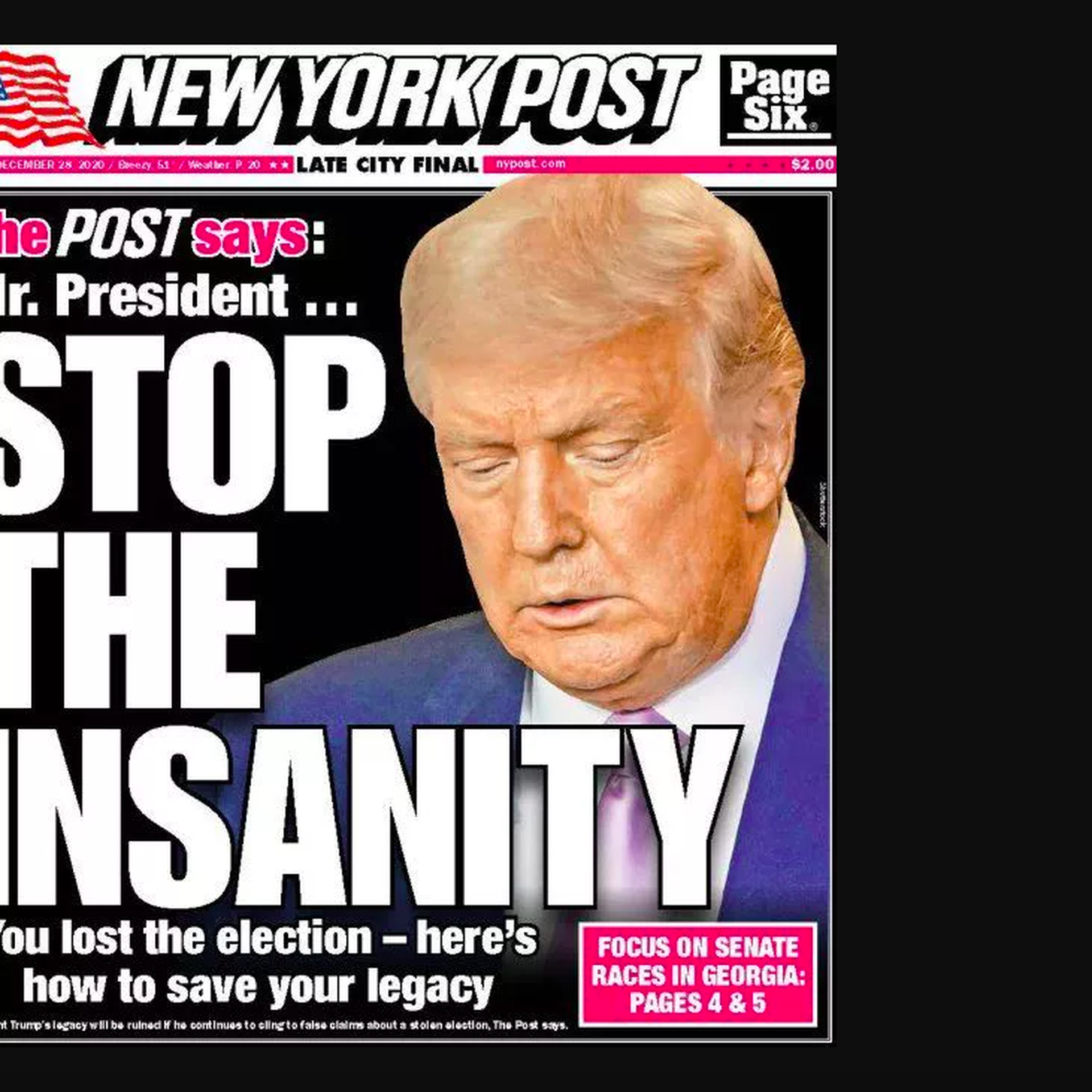
Discussions surrounding the mental state of Donald Trump have been a prominent feature of his political career, encompassing a range of perspectives from mental health professionals, political commentators, and the public.1While the term “insanity” is a legal and social concept rather than a clinical diagnosis, concerns about Trump’s fitness for office have been articulated through various psychological and neurological frameworks.2
Claims and Counterclaims
Concerns about Cognitive Health: A number of neuropsychologists and psychologists have publicly voiced concerns about what they perceive as a decline in Trump’s cognitive abilities.3 These concerns are often based on observations of his public statements, speech patterns, and behavior. For instance, Dr. Narinder Kapur, a senior neuropsychologist, suggested Trump undergo cognitive testing, including for Alzheimer’s disease, citing what he described as “odd and strange” public statements and behaviors.4Similarly, psychologist Dr. John Gartner has pointed to a perceived deterioration in Trump’s motor skills and language as potential signs of early-stage dementia.5
In his defense, Donald Trump has consistently asserted his mental acuity, famously describing himself as a “very stable genius.” Official reports from his White House physician have stated that he exhibits no signs of memory loss, neurological abnormality, or cognitive impairment. During his presidency, it was reported that Trump took the Montreal Cognitive Assessment (MoCA), a screening tool for cognitive function, and scored a perfect 30/30.6The White House released a statement in April 2025 affirming he was in “excellent health” and “fully fit” to serve as commander-in-chief.7
Psychological Assessments from a Distance: Beyond cognitive decline, some mental health professionals have suggested that Trump’s behavior aligns with certain personality disorders.8A notable publication, “The Dangerous Case of Donald Trump,” featured essays from 27 psychiatrists, psychologists, and other mental health professionals arguing that Trump’s mental health posed a “clear and present danger” to the nation.9Common assertions in the public discourse have included suggestions of narcissistic personality disorder, characterized by grandiosity, a need for admiration, and a lack of empathy.10
The Goldwater Rule and Ethical Debates
Public commentary on the mental health of political figures is a contentious issue within the psychiatric community, largely due to the “Goldwater Rule.”11This ethical guideline from the American Psychiatric Association (APA) states that it is unethical for psychiatrists to offer a professional opinion on a public figure without conducting an examination and being granted proper authorization for such a statement.12
The rule emerged after the 1964 presidential election when a magazine published a survey of psychiatrists on whether Barry Goldwater was psychologically fit to be president, to which he successfully sued for libel.13 During Trump’s presidency, the Goldwater Rule became a subject of intense debate. Some mental health professionals argued that the potential danger posed by a president’s mental state constituted an exception, invoking a “duty to warn.” Others maintained that diagnosing from a distance is irresponsible and often influenced by political bias, undermining the credibility of the psychiatric profession. The APA has consistently upheld the Goldwater Rule, cautioning its members against speculating on the mental health of public figures.
Political and Public Discourse
The debate over Trump’s mental state has also been a significant element of political and public discourse. Critics have pointed to his often-unconventional communication style, use of hyperbole, and challenges to established facts as evidence of a concerning psychological profile. His political opponents and some media outlets have frequently highlighted instances of apparent confusion or verbal missteps.14
Conversely, his supporters often view his communication style as authentic and a rejection of political correctness. They may attribute criticisms of his mental state to political animosity and an attempt to pathologize a disruptive political figure.
It is important to note that without a formal clinical evaluation, any public discussion of a political figure’s mental health remains in the realm of observation and speculation. The complexities of personality, political strategy, and potential underlying health issues are difficult to disentangle from a distance, making definitive conclusions challenging.
–
The Question of “Insanity” and the 25th Amendment
The question of whether a president is “insane” and if the 25th Amendment could be invoked involves navigating complex medical, legal, and political territory. The term “insane” itself carries different meanings in each of these contexts, and any discussion of a president’s fitness for office necessitates a clear understanding of these distinctions.
Defining “Insanity”: A Multifaceted Term
Medically, the term “insane” is largely obsolete.1Clinicians diagnose specific mental health conditions with precise criteria, and “insanity” is not a diagnosis.2What might be informally labeled as “insane” behavior could stem from a range of conditions, or it might not be related to a medical condition at all.3
Legally, “insanity” is a specific concept used in criminal defense.4The legal standard for insanity varies by jurisdiction, but it generally centers on whether a defendant, due to a severe mental disease or defect, was unable to understand the nature of their actions or that their actions were wrong.5This is a high bar and is determined through a legal process, not a medical diagnosis alone.6 When discussing a president’s fitness for office, this criminal law definition is not directly applicable.
Politically, the term “insane” is often used rhetorically to criticize a political figure’s decisions, statements, or behavior.7 In this context, it is a subjective label and not a formal or legal determination.
Discussions Surrounding Donald Trump’s Mental State
Throughout his political career, Donald Trump’s mental state has been the subject of public discussion and speculation from various quarters, including mental health professionals, political commentators, and the media.8
Some mental health professionals have publicly expressed concerns, often pointing to behaviors they view as indicative of certain personality traits or potential cognitive issues.9It is crucial to note the “Goldwater rule,” an ethical principle from the American Psychiatric Association that discourages psychiatrists from offering professional opinions on public figures they have not personally examined.10
Conversely, supporters and allies of Donald Trump have dismissed these concerns as politically motivated attacks. They often point to his accomplishments and his self-described status as a “very stable genius.” Official White House physicians during his presidency stated that he was in excellent health, and he has touted his performance on a cognitive screening test.
These differing views highlight the challenge of assessing a public figure’s mental fitness from a distance and the politicization of such discussions.
The 25th Amendment: A High Constitutional Bar
The 25th Amendment to the U.S. Constitution provides a mechanism for the transfer of presidential power in cases of death, resignation, removal, or disability.11Section 4 is most relevant to discussions of a president’s potential inability to serve.12
Legal and Procedural Aspects of Invoking Section 4:
The process for involuntarily removing a president from power is intentionally rigorous:
Initiation: The Vice President and a majority of the principal officers of the executive departments (the Cabinet) must declare in writing to the President pro tempore of the Senate and the Speaker of the House of Representatives that the President is unable to discharge the powers and duties of their office.13
Immediate Transfer of Power: Upon this declaration, the Vice President immediately assumes the powers and duties of the office as Acting President.14
Presidential Contest: The President can then submit a written declaration to the congressional leaders stating that no inability exists.15 If they do so, they would resume the powers and duties of the presidency.
Congressional Decision: If the Vice President and a majority of the Cabinet submit another written declaration within four days that the President remains unable to serve, the matter is then decided by Congress.
Supermajority Vote: Congress must assemble within 48 hours and has 21 days to vote.16A two-thirds vote in both the House of Representatives and the Senate is required to declare the President unable to serve, in which case the Vice President would continue as Acting President.17 If this two-thirds majority is not reached, the President would regain their powers.
Basis for Invocation:
The basis for invoking the 25th Amendment is a president’s “inability to discharge the powers and duties of his office.”18 This phrase is not explicitly defined in the Constitution, leaving it open to interpretation based on the circumstances. The inability could be physical, mental, or otherwise.
The threshold for invoking the 25th Amendment is exceptionally high, designed to prevent its use for political purposes.19 It requires the agreement of those closest to the President—the Vice President and the Cabinet—and, if contested, a supermajority in Congress. This makes its successful invocation a significant constitutional and political challenge. There have been discussions and calls for its use in various contexts throughout history, including during the Trump administration, but Section 4 has never been invoked.20
–
The Evolving Concept of “Political Insanity”: From Medicalized Dissent to Modern Metaphor
The term “political insanity” is not a clinical diagnosis but a powerful and often contentious label used to describe a range of political phenomena, from individual actions to the behavior of entire societies. Its meaning has evolved significantly, originating as a medical concept to suppress dissent and now serving as a colloquial descriptor for political behavior that is perceived as irrational, counterproductive, or dangerously detached from reality.
A Controversial Medical Past
Historically, the concept of “political insanity” was wielded as a tool of political repression. In various regimes, individuals who expressed views contrary to the ruling ideology were diagnosed with forms of mental illness.1This medicalization of dissent served to delegitimize opposition and justify the confinement and silencing of political opponents.2For instance, in the Soviet Union, dissidents were often diagnosed with “sluggish schizophrenia,” a diagnosis created to pathologize non-conformist thought and behavior.3 This historical misuse highlights the dangers of conflating political disagreement with mental pathology.
The Psychology of Political Irrationality
In a more modern and metaphorical sense, “political insanity” is often used to describe political behavior that appears to defy logic and self-interest. Political psychology offers several lenses through which to understand this perceived irrationality:
Cognitive Biases: Individuals are prone to a variety of cognitive shortcuts and biases that can lead to flawed political reasoning. Confirmation bias, for example, is the tendency to favor information that confirms pre-existing beliefs while ignoring contradictory evidence.4 This can lead to political positions that are resistant to facts and logical persuasion.
Motivated Reasoning: This is the tendency to process information in a way that is emotionally biased, aiming to arrive at a particular and preferred conclusion. In the political realm, this can manifest as voters or politicians clinging to beliefs that are emotionally satisfying, even when evidence suggests they are misguided.
Groupthink and Polarization: The dynamics of political tribes and polarization can foster an environment where extreme or irrational ideas are normalized and amplified. Within an insular group, dissenting opinions may be suppressed, leading to a collective conviction in ideas that appear “insane” to outsiders. As political polarization intensifies, the “other side” is often viewed not just as wrong, but as fundamentally irrational.5
“Political Insanity” in Contemporary Discourse
In today’s political commentary, “political insanity” is a frequently used pejorative. It is employed to criticize a wide array of political actions and figures:
Policy Decisions: Policies that are seen as economically disastrous, socially divisive, or based on flawed premises are often labeled as “political insanity.” This rhetoric is used by commentators and political opponents to galvanize public opinion against a particular course of action.
Political Candidates and Leaders: The behavior and statements of political figures are sometimes characterized as “insane” to question their fitness for office or to highlight what is perceived as a departure from normal political conduct.
The Political Climate: The term is also used more broadly to describe a general sense of political chaos, dysfunction, and a breakdown of rational discourse. In this context, “political insanity” refers to a perceived societal condition where political processes seem to be driven by emotion, misinformation, and partisan fervor rather than reasoned debate and compromise.
Critiques of Using Mental Health Language in Politics
While the term “political insanity” can be a potent rhetorical device, its use is not without criticism. Invoking the language of mental illness to describe political opponents can be stigmatizing to individuals who experience actual mental health conditions. Critics argue that this practice can trivialize the complexities of both mental illness and political disagreement. Furthermore, labeling political adversaries as “insane” can shut down productive dialogue and contribute to the very political polarization it often seeks to condemn.
In conclusion, “political insanity” is a multifaceted term with a dark history and a complex present. While it lacks a formal definition, its usage points to a deep-seated concern with the role of reason, logic, and stability in the political sphere. Whether used to describe the calculated repression of dissent, the psychological quirks that drive political behavior, or the chaotic nature of modern politics, the concept of “political insanity” serves as a powerful, if controversial, lens through which to view and critique the world of politics.
–
Legal Insanity and the Presidency: An Examination of the Standard and Public Discourse
The question of whether a president can be deemed “legally insane” involves a complex intersection of legal standards and political realities. Legally, the term “insanity” has a specific definition within the criminal justice system that is not synonymous with a medical diagnosis of mental illness. There has been no formal legal proceeding in which Donald Trump’s sanity has been adjudicated, and therefore, he has never been found to be legally insane.
The concept of legal insanity is primarily used as a defense in criminal prosecutions.1 The standards for determining legal insanity vary by jurisdiction but generally fall into a few categories:
The M’Naghten Rule: This is the most common standard in the United States.2To be found not guilty by reason of insanity under M’Naghten, a defendant must prove that, at the time of the offense, they were suffering from a “disease of the mind” to the extent that they did not know the nature and quality of the act they were doing, or if they did know it, they did not know that it was wrong.3
The Model Penal Code (MPC) Test: This standard, adopted by a number of states, holds that a person is not responsible for criminal conduct if, as a result of a mental disease or defect, they lack the “substantial capacity” to either appreciate the criminality of their conduct or to conform their conduct to the requirements of the law.4
The Irresistible Impulse Test: Used in some states, often in conjunction with the M’Naghten rule, this test absolves a defendant of criminal responsibility if they were driven by an “irresistible impulse” to commit the crime, even if they knew it was wrong.5
It is crucial to understand that these standards are applied in a courtroom setting, with extensive psychiatric evaluations and expert testimony. They are not metrics for casual or political assessment.
Public discourse surrounding Donald Trump’s mental state has been extensive, with a wide range of opinions expressed by mental health professionals, political commentators, and the general public.6Some mental health professionals have publicly offered opinions on his psychological fitness for office, often citing behaviors and speech patterns as evidence for various diagnoses.7However, these long-distance assessments are ethically controversial and are often viewed as a violation of the “Goldwater Rule,” an ethical guideline from the American Psychiatric Association that discourages psychiatrists from diagnosing public figures they have not personally examined.8
During his presidency, Donald Trump’s physician stated he was in “excellent health” and that he “aced” a cognitive screening test known as the Montreal Cognitive Assessment (MoCA).9 This test is designed to detect mild cognitive impairment but is not a comprehensive psychiatric evaluation and does not assess legal sanity.
In summary, while there has been significant public and professional debate about Donald Trump’s mental fitness, the question of his legal sanity has never been formally addressed in a court of law. The standards for legal insanity are specific to criminal defense and have not been applied to him. Therefore, there is no legal basis to declare him “legally insane.”
Better Kid Care provides evidence-informed professional development to early care and education and youth development professionals to improve the quality of their care and educational practices.