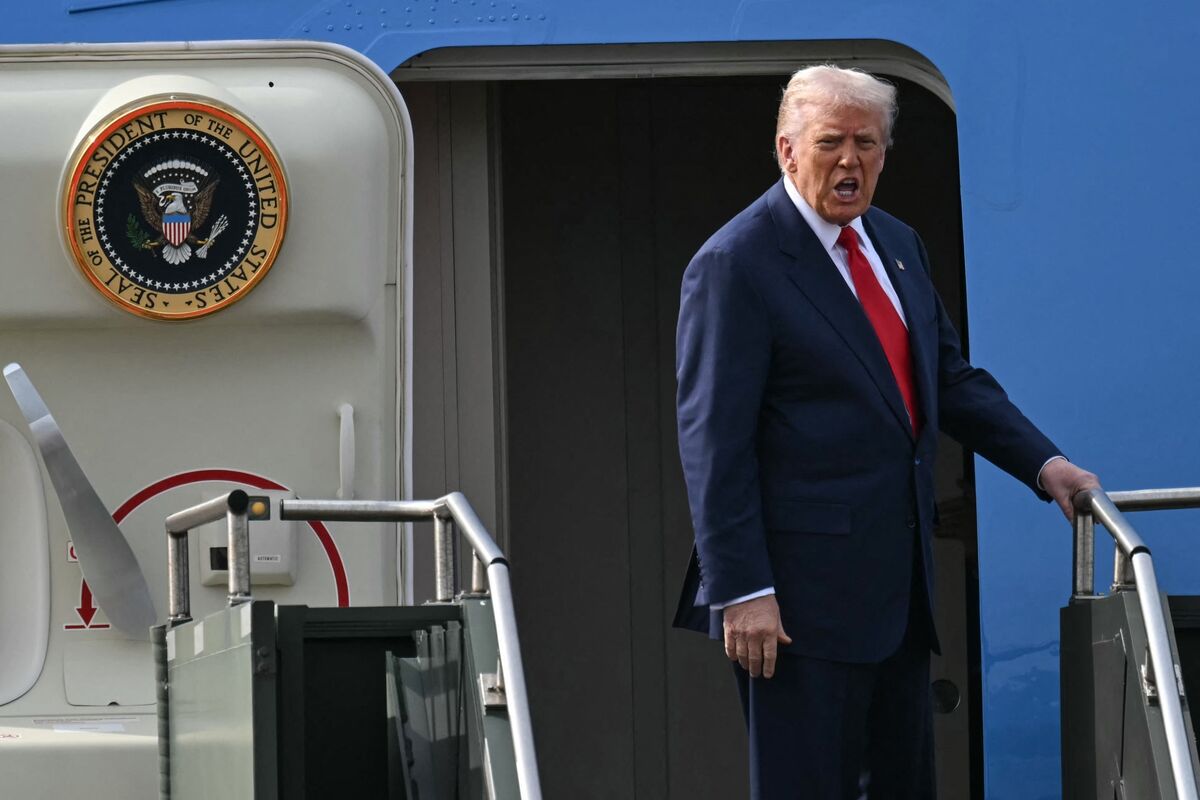
Trump and Xi shake hands before sitting down for meeting in South Korea
Day: October 30, 2025
Michael Buckner/Variety via Getty Images
- Charlie Sheen says that hiding his HIV diagnosis was “a lot worse” than managing his condition.
- Although his diagnosis was “really depressing,” he said he found comfort in knowing there were treatment options.
- “You know, it’s not the best news. But there was other news that could have been a lot worse, you know?” Sheen said.
Charlie Sheen says the weight of hiding his HIV diagnosis took a greater toll on him than managing the condition itself.
On Thursday’s episode of “In Depth with Graham Bensinger,” the actor spoke about his new memoir and shed light on his journey living with HIV.
“Keeping it under wraps was a lot worse than just having it. And I didn’t realize that until I finally sat with Matt Lauer, and was just like, ‘Here’s what’s going on,'” Sheen told host Graham Bensinger. “That side of it, that was really difficult because there was a lot of nefarious behavior.”
The “Two and a Half Men” actor said he was “extorted” by people who knew of his diagnosis before he went public.
“I was just like, ‘All right, the only way to make this go away is to do what I did on the freaking ‘Today’ show. On live television, tell the world,” Sheen said.
The actor shared that the lead-up to his diagnosis was filled with a lot of uncertainty, especially after he began experiencing severe headaches.
“I thought it was a brain tumor or spinal something or liver cancer or something terminal for sure, which is why I didn’t want to go to the hospital. And I think I avoided it for like a day and a half, you know, and finally just had to go,” Sheen said.
He added that his ex-wife, Denise Richards, was the one who took him to see a doctor.
Sheen said getting his diagnosis was a sobering moment.
“But when you get the results, when you get the news, you’re like, ‘Oh, OK. All right. Let’s just take it, just take this in.’ You know, it’s not the best news. But there was other news that could have been a lot worse, you know?” Sheen said.
Although it was “really depressing,” Sheen said he was “fortunate” that treatment options were available.
“I had some perspective to look at it as, OK, I thought it was going to be this, and it’s not. So that’s a pretty big win that I’m going to take in the middle of this big loss,” Sheen said. “It was like, OK, we can treat this thing, and there’s like, here’s all the technology for that, you know.”
In 2015, Sheen publicly revealed his HIV diagnosis in a “Today” show interview with Matt Lauer.
Back then, the actor said he paid “enough to bring it into the millions” to people who tried to blackmail him over his condition, and hoped that going public would finally put an end to it.
“That’s my goal. That’s not my only goal. I think I release myself from this prison today,” Sheen said.
Sheen isn’t the only actor who has publicly revealed his HIV diagnosis.
In 2021, actor Billy Porter told The Hollywood Reporter that he chose to reveal his diagnosis to help break stereotypes around living with HIV.
“I’m living so that I can tell the story. There’s a whole generation that was here, and I stand on their shoulders,” Porter said. “I can be who I am in this space, at this time, because of the legacy that they left for me. So it’s time to put my big boy pants on and talk.”
Other celebrities who have spoken about their HIV diagnosis publicly include Magic Johnson and “Queer Eye’s” Jonathan Van Ness.
Although there is no cure for HIV, there are treatment options available. When taken as prescribed, the medication can make the viral load in a person’s body so low that it’s undetectable. Having an undetectable viral load means that the person cannot transmit the virus to others during sex, the CDC said.
A representative for Sheen did not immediately respond to a request for comment sent by Business Insider outside regular hours.
Read the original article on Business Insider
Omar Marques/Getty Images
- Poland said it scrambled two fighter jets on Tuesday to intercept a Russian Il-20 spy plane.
- Warsaw said the plane didn’t violate Polish airspace, but turned off its transponder.
- It comes as NATO allies say they’re feeling increased pressure from Russian airspace violations.
Poland said on Wednesday that two of its fighter jets intercepted a Russian spy plane in the Baltic Sea, as NATO remains on edge over air incursions that it fears are a way for Moscow to test its responses.
The Polish Armed Forces said that the plane, an Ilyushin-20 turboprop-powered reconnaissance aircraft, was flying on Tuesday just outside Polish airspace but had turned off its transponder.
Flying dark in this manner typically indicates that a military aircraft is conducting, or providing support for, a surveillance mission.
The armed forces said in a statement that two Polish Mikoyan MiG-29s “successfully intercepted, visually identified, and escorted” the Russian plane.
“Thanks to the high combat readiness, the professionalism of the pilots and the efficient functioning of the air defense system, the operations were carried out quickly, effectively and safely,” the Polish Armed Forces’ operational command wrote in a statement.
The Russian defense ministry did not respond to a request for comment sent outside regular business hours by Business Insider.
Poland shares part of its northeastern border with Kaliningrad, a Russian exclave on the Baltic Sea. The sea has been a particular area of tension since Moscow’s invasion of Ukraine, since it serves the coasts of eight NATO allies and Russia.
Warsaw has especially been on guard against Russian activity near its borders as of late, after it sounded the alarm over a series of drone incursions on September 10.
Several other European NATO allies on or close to the Baltic Sea, such as Denmark, have since also reported unannounced drones that forced airports to close.
On September 20, Estonia also invoked NATO’s Article 4, which summons the alliance’s member states for consultations, over what it said were three Russian fighter jets violating its airspace.
“Russia bears full responsibility for these actions, which are escalatory, risk miscalculation, and endanger lives,” NATO wrote in a statement shortly after Estonia’s request. “They must stop.”
More recently, Lithuania warned that it has been receiving hundreds of helium-filled balloons from Belarus, a close Russian ally, which it accused Minsk of permitting to fly over on purpose.
The size of the balloons poses a danger to aircraft, officials said, forcing the country to repeatedly shut its airports.
Read the original article on Business Insider