Jessica Winder worked two full-time HR jobs during the pandemic and saved $100,000.
She managed both roles for a year by leveraging remote work flexibility and setting financial goals.
Winder’s experience highlights the potential — and risks — of juggling multiple full-time jobs.
This as-told-to essay is based on a conversation with Jessica Winder, a 37-year-old senior vice president of HR for a Canadian tech company and career coach in Las Vegas. It has been edited for length and clarity.
With nowhere to go and nothing else to do, I figured — why not? After doing it for a year, I saved over $100,000.
At my first job, I was able to finish my work early and often felt bored
One night while watching TV, I thought: If I have the time and capacity, why couldn’t I take on another full-time job, without anyone finding out?
I didn’t know anyone personally who had done this. I’d heard of contractors juggling multiple gigs, but not salaried employees.
When I picked up the second job, it was always meant to be short-term. I told myself I’d do it for 90 days, save up some money, pay off my credit cards, and then quit one of them.
I applied via LinkedIn to several jobs and made it to the final round for two companies. I picked the one that seemed the easiest. In the interview, I just made it seem like I’d be leaving the first job.
The second job was always the one I planned to leave
I didn’t care about it. I cared more about the first one, where I’d been for a while.
Both of my jobs paid six figures. After reaching my first goal of paying off my credit cards, I thought, Well, they haven’t found out yet, so I kept going. I set a new goal to save $20,000.
Once I reached that goal, I continued to create new ones. I put some of the money toward my wedding, honeymoon, and relocation to Las Vegas, and I still have some of the money in my savings to this day.
I didn’t change my lifestyle at all; I had the same car, apartment, and everything else. I may have eaten out more, but besides that, all of the money went into my savings account.
It was chaos at times
At one company, I was in a leadership role. I had enough autonomy to block time on my calendar — marking it as “hold” — so it wouldn’t raise a red flag. Still, it didn’t always go smoothly.
There was a day when I had to be in two meetings at the same time. One company required cameras to be on, while the other didn’t care. I set up both laptops: on one, I had my camera on and was fully engaged. On the other, I logged in and turned off both the camera and the sound. The whole time, I was so anxious, constantly worrying that one meeting might somehow hear the other one.
When I tell people this, they often say, “You know, you’re greedy,” or “That could have been someone else’s job.” I understand where they’re coming from, but my stance is also: They paid me to do a job, and I did it. I think you can have 10 jobs if you want to — if you’re willing to get the work done.
There were some pros and cons, too.
Pro: It gave ‘recession-proof’ income
During the pandemic, I saw a lot of my friends get laid off. That’s when I started thinking: If I have two jobs and one lets me go, I’ll still have a job. In my mind, that felt recession-proof.
That was the thinking behind it, and honestly, I still stand by that.
Pro: It was cross-training on a whole new level
In one role, I focused heavily on training and development, while the other was much more centered on employee relations. I was getting the best of both worlds.
That kind of cross-training just doesn’t happen in a single job. Normally, you’d specialize in one area or the other. By juggling both, I expanded my skill set in two different areas at once.
Con: It was a lot to balance
From 8 to 5, my entire day was packed with meetings, bouncing back and forth between the two companies. Then at night, I’d get the actual work done — splitting my evenings between company A and company B.
I often worked 12- to 13-hour days and kept it up for 12 months straight. There were so many moments when I’d be working on something and suddenly think, Wait — am I doing this for the right company? I was constantly switching back and forth.
I also had to constantly monitor my Slack messages — it was complete chaos. To this day, I still have Slack notifications turned off because just hearing that sound makes me anxious.
Con: Juggling time off was exhausting
This was during the pandemic, so it’s not like I was vacationing much, but when I did want to take PTO, I had to make sure it coordinated with both roles.
There was a time when I took a week off from one job, but I couldn’t take the same week off from the other. So it really wasn’t time off — it was a break from constantly switching between the two roles.
Would I do it again?
I quit the second job after 12 months, and now I have a different job, but I’m happy with just the one.
At this current stage in my life, now that I have kids, I wouldn’t do it again. I don’t have the time, but would I advise someone single, who doesn’t have kids, and does have the time to do it? Maybe.
But understand there’s a risk to it. If one company finds out, you could be fired from both jobs. You could keep it going for a year without anyone finding out — that’s what happened to me — but you could also get caught in two months and lose everything.
M&D Truck and Equipment is a trusted & reliable reseller. We specialize in resale of attachments, construction, farm, landscape, and support equipment.
With events like its Haunted Fanta Factory, a partnership with Universal and Blumhouse, Coca-Cola wants to own Halloween.
Coca-Cola
Coca-Cola’s Fanta is going big on Halloween with a haunted house with Universal and Blumhouse.
It’s the latest example of how it’s using Halloween as a way to get to Gen Z.
Fanta wants to be to Halloween what Coke is to Christmas.
This Halloween, horror fans will be invited to a live experience from Coca-Cola’s Fanta, where they’ll be spooked by iconic scary movie characters like Chucky and M3gan and challenged to navigate a series of escape rooms.
The Haunted Fanta Factory, open nightly in New York from October 29 to 31, is the product of a Coca-Cola partnership with Hollywood studio Universal Pictures and its production partner Blumhouse. There will also be soda cans sporting movie characters, a limited flavor sold at AMC theaters, and other live events around the world.
It’s Coca-Cola’s second year of celebrating Halloween on a global scale. Coca-Cola has been leaning hard into Halloween as it tries to replicate the flagship brand’s long-standing association with Christmas. Fanta is the way in because it’s the company’s play for Gen Z, and Gen Z particularly loves Halloween.
“We are trying to make Halloween to Fanta what Christmas is to Coke,” said Ibrahim Khan, global VP of marketing at The Coca-Cola Co.
Halloween has become a big holiday for brands as people spend more and start earlier every year. The National Retail Federation estimated people will spend a record $13.1 billion on Halloween this year, up nearly 13% from last year, even with most people expecting prices to be higher due to tariffs.
Brands have had their share of missteps marketing around the holiday, from Dunkin making creepy spidery donuts to Heinz making an ad that some said took on racist overtones, for which it apologized.
Khan said his team was deliberate about making sure the campaign fit with Fanta’s image of being fun and lighthearted.
“We were also very deliberate about leaning into what we call horror comedy, not a sort of hard, gory, slasher kind of world,” he said. “And Universal Pictures and Blumhouse know this world significantly better than we do, and they kept guiding us along the way.”
Coca-Cola has been an early mover using AI in its marketing, sometimes to negative reactions. Khan said AI didn’t play a big part in this campaign, owing to its complexity.
“This campaign goes up in 50 markets simultaneously, millions of and millions of consumers, and thousands of associates touch it. I would be remiss to say that we are ready to take all of that on using AI right now at this moment,” he said. “Also, when we feel the capability is ready at our end, we will, 100%.”
Coke is trying to tap into fandom to be relevant to Gen Z
Leaning on Hollywood to court Gen Z might seem counterintuitive, given its apathy toward theater-going. But Khan says it’s more about tapping into people’s fandom, whether they’re actually going to the theater or not.
People are increasingly avoiding TV ads, and Coke and other brands know they have to be more creative when it comes to getting their message out. To that end, Coca-Cola has shifted spending from TV advertising to digital media and live events like this Halloween’s haunted house.
“In this day and age, where our ability to speak to a captive audience on a television set is gone, we have to find different ways of connecting with them, and social media is where it’s at, and product experiences are what they talk about,” Khan said. “So Gen Z may not go to the theater to go watch ‘Star Wars,’ but they will watch it or they will be aware of it, or they will have some connection with that icon in that IP.”
The Universal pact is also notable as the latest example of how the soda maker is using a full range of Hollywood studio IP in its marketing, rather than just one part as it has in the past. Earlier this year, Coke put out limited edition cans and bottles featuring dozens of characters from Disney’s “Star Wars.” Last year, it partnered with Disney’s Marvel on a TV spot and put characters like Captain Marvel and Deadpool on cans.
FieldAI recently raised $405 million from industry giants including Gates, Bezos, Nvidia, Intel.
AI has gotten much better at digital tasks, but struggles in the physical world.
FieldAI robots perform relatively simple jobs, while collecting fresh data, and build from there.
In a recent South Park episode, Randy Marsh urges his daughter to learn hands-on skills because AI will automate many knowledge-based jobs.
“AI can do everything better than we can, except for stuff that requires arms,” he says.
It’s funny, but also true. AI models are getting really good at digital skills such as coding. Beyond bits, though — in the physical world — AI is nowhere near matching the ability of humans to perform many different tasks.
A big reason for this yawning capability gap is data. In the digital world, the internet provides a readymade mountain of information that machines can learn from. In the world of atoms, there’s no equivalent.
This physical-world data mountain must be built from scratch. It’s a herculean task. I recently met an unassuming startup founder who’s hacking away at this problem in an interesting way.
Data without physical assets
FieldAI CEO Ali Agha
FieldAI
Ali Agha spent seven years at the NASA Jet Propulsion Laboratory in Pasadena, California, developing autonomous multi-robot systems for exploring different environments, including Mars. He started FieldAI in early 2023 and has a team of robotics and AI experts from companies including Google, DeepMind, Waymo, Tesla, Nvidia, Boston Dynamics, and Amazon.
In the race to amass all this physical world data, some big tech companies have a natural advantage. Tesla has huge vehicle and battery factories. Amazon runs hundreds of massive warehouses. Foxconn assembles millions of iPhones and servers in gigantic plants. If you don’t have such assets, you have to get more practical and inventive. And this is exactly what FieldAI has done.
Its AI models are designed to get many different types of robots out into real-world situations as quickly and safely as possible. Once there, they perform relatively simple but valuable tasks. While doing this, these machines constantly collect new data, which is fed back into the startup’s AI models, which helps them improve. This, in turn, helps FieldAI release more robots into new situations, where, again, they gather even more data and learn all over again.
A FieldAI robot at work
FieldAI
This is a contrast to some other AI robotics players, which are working on much more ambitious capabilities before getting their machines out in the wild.
“You’re deploying more, you’re getting more data, and that data makes the model better, which helps you deploy even more, and even more data is starting to be collected,” Agha told me in a recent interview. “This flywheel has started spinning faster and faster.”
Big investors
Venture capitalist Vinod Khosla
Reuters
In the six months of 2025, FieldAI contracted 10 times more robots than in the first half of 2024. This is helping to drive that flywheel of real world data collection.
This has caught the eye of major investors. In August, FieldAI raised $405 million, one of the largest startup funding rounds this year. Backers include Nvidia, Jeff Bezos, Bill Gates, Vinod Khosla, Intel, Samsung, and Laurene Powell Jobs.
“Enabling autonomy solutions at scale is an extremely difficult problem, but the deep expertise of the FieldAI team and their unique approach to embodied intelligence reflects a pragmatic path forward,” said Khosla, who was one of the first investors in OpenAI.
The new money will pay for new hires and a major push to “productize” FieldAI’s novel approach, according to Agha. That means getting a heck of a lot more data-collecting robots out into the world.
The startup’s AI models are designed to control many different types of robots, from quadrupeds to humanoids, wheeled robots, and passenger-scale vehicles. The machines are already deployed in Japan, Europe, and the US, in industries including construction, energy, manufacturing, urban delivery, and inspection.
Agha took me through a practical example from the construction industry to show how FieldAI’s approach is working.
BIMs, robots, and ROI
A FieldAI robot operating alongside a construction worker
FieldAI
Building Information Modeling, or BIM, is an established way to create a detailed digital copy of a construction project, so progress and issues can be tracked accurately.
Usually, BIMs are maintained and updated by human employees walking around construction sites, recording details manually by taking photos and writing notes.
Instead, FieldAI deploys robots to conduct these site tours and update BIMs automatically. This helps construction companies keep better track of the projects, and it’s more thorough and cheaper than hiring human workers to walk around for hours doing this task, according to Agha.
A key task is taking photos regularly so you can go back over time and see a project’s progress, or a lack of progress. Was the drywall put in before all the piping was finished? If there’s a disagreement between the contractor and the insurer, for instance, having an extremely detailed photographic record of the project over time is key.
A robot can walk around these huge sites non-stop, 24/7, while a human can’t, which makes these automated BIMs much more detailed and accurate, Agha noted.
As FieldAI machines tour these sites, they constantly collect new data, which gets fed back to improve the AI models that power the robots. Then, next time, the robots can add more tasks.
“A huge benefit of these platforms is that they compound future use cases,” Agha said. So one month, a FieldAI robot is taking site photos. The next month, it might also check that the safety barriers are in the correct place. The following month, it might add inventory tracking. There were 100 copper pipes on the second floor yesterday so why are there only 25 now?
The end result is that construction projects can be monitored more closely for less cost, increasing customers’ return on investment, according to Agha.
“The key for ROIs, is that the person who was previously walking six hours a day around these massive sites — this person now spends most of their time checking the incoming data from our robots and is analyzing where there’s progress and why these other things haven’t happened,” he said.
Recently, FieldAI had to pull one of these robots from a construction site, due to a paperwork issue. The project superintendent kept calling to ask when the robot was coming back, because they’d gotten so used to an automated system patrolling the site and reporting back so often, according to Agha.
“That was a signal for us,” he said. “It was a validation that helped to convince us that this is the right time to grow.”
The home of South Carolina Circuit Court judge Diane Goodstein was set on fire after she had reportedly received death threats.
State law enforcement is investigating the house fire on Edisto Beach which began at around 11:30 a.m. E.T. on Saturday, sources told local news outlet FITSNews. Goodstein was reportedly not at home at the time of the fire, but at least three members of her family, including her husband, former Democratic state senator Arnold Goodstein, and their son, have been hospitalized with serious injuries. According to the St. Paul’s Fire District, which responded to the scene, the occupants had to be rescued via kayak. Law enforcement have not disclosed whether the fire is being investigated as an arson attack.
[time-brightcove not-tgx=”true”]
“At this time, we do not know whether the fire was accidental or arson. Until that determination is made, [State Law Enforcement Division Chief Mark Keel] has alerted local law enforcement to provide extra patrols and security,” South Caroline Chief Justice John Kittredge told FITSNews, adding that the fire appeared to have been caused by an “explosion.”
The 69-year-old judge had received death threats in the weeks leading up to the fire, multiple sources told FITSNews. Last month, Goodstein had temporarily blocked the state’s election commission from releasing its voter files to the Department of Justice, a decision that was openly criticized by Assistant Attorney General for Civil Rights Harmeet Dhillon and later reversed by the state Supreme Court. The DOJ had sought the information, including names, addresses, driver’s license numbers, and social security numbers, of over three million registered voters as part of President Donald Trump’s March executive order restricting non-citizens from registering to vote. (Non-citizens are already not allowed to vote in federal and state elections.)
The Trump Administration has sought to drastically reshape the election system in the name of election integrity, by requesting and in some cases suing states for voter registration data to compile a comprehensive centralized database from more than 30 states, including suing several of them, and considering pursuing criminal investigations into state election officials. Critics have argued that the Administration’s efforts are an attempt at disenfranchising voters from marginalized communities and overstepping states’ constitutional authority to control election procedures.
If the fire at the judge’s house turns out to be targeted, it may mark the latest incident of a startling rise in political violence in the U.S. And while the Trump Administration has blamed the left’s rhetoric for inspiring violence such as the assassination of conservative activist Charlie Kirk, an attack on a judge would come as the Administration has increasingly vilified the judiciary, blasting judges that rule against it as “U.S.A-hating” insurrectionists.
Political violence on the rise
In addition to Kirk’s murder last month, the murder of Democratic Speaker of the Minnesota House of Representatives Melissa Hortman and her husband in June, and an arson attack at Democratic Pennsylvania Gov. Josh Shapiro’s residence in April, a number of judges who have ruled against Trump have also received attacks and threats from his supporters.
Chief Judge for the District of Rhode Island Jack McConnell told NPR in August that his court has received more than 400 threatening voicemails, including several credible death threats. McConnell had issued a ruling blocking Trump’s freeze on federal aid earlier this year. Judges told NPR that they have received unsolicited anonymous pizza deliveries, a tactic known as “pizza doxxing” that implies that the sender knows the judges’ addresses.
A White House spokesperson told NPR that attacks on public officials have “no place in our society,” noting the President’s own experience with assassination attempts last year.
“I’m hearing everywhere that judges are worried about their own safety. There are people who are inflamed by the incendiary comments of our president and members of Congress about judges. Public officials have legitimized attacks on judges with whom they disagree,” Nancy Gertner, a former judge and current professor of practice at Harvard, told the Guardian in May.
That month, Richard Durbin, top Democrat on the Senate judiciary committee, penned a letter to Bondi and FBI Director Kash Patel requesting an investigation into “pizza doxxing” incidents against at least a dozen judges.
“Threats against judges are threats against constitutional government. Everyone should be taking this seriously,” New York Judge Richard Sullivan, a Trump first-term appointee, told the Associated Press in March.
“This is a basic authoritarian instinct,” Steven Levitsky, a political scientist at Harvard University and coauthor of How Democracies Die, told the AP. “You cannot have a democracy where the elected government can do whatever it wants.”
Trump Administration’s targeting of judges
Less than a year into his second presidential term, Trump has asserted an expansive view of his executive powers. As of October, Trump has issued over 300 orders, proclamations, and memoranda, many of which have resulted in thorny and protracted legal battles. Between May 1 and June 23, federal district courts blocked Trump’s actions with temporary restraining orders or preliminary injunctions around 94% of the time, according to data analyzed by Adam Bonica, an associate professor of political science at Stanford University, while the Supreme Court reversed those orders in close to 94% of its cases. Critics have said that the sheer amount of litigation, some of which has been brought or appealed by the Trump Administration, could overwhelm the judiciary.
“What President Trump has done, perhaps more than other presidents, has been to not only bring the test cases and force the courts to deal with these issues, but to do it in a shock and awe strategy, which puts additional stress on the courts,” Steven Richman, Chair of the IBA Bar Issues Commission, told podcast Global Insight, speaking in a personal capacity. “Test cases are one thing, but as in any litigation involving parties and lawyers on both sides, the facts and positions taken must satisfy rules of professional ethics in terms of not being frivolous.”
Others have said the bigger threat comes from Trump officials attacking judges that rule against the Administration. Trump and his allies have also sought to portray the judiciary and their decisions as politicized and “judicial overreach.”
Hours before the fire at Goodstein’s house, Trump’s deputy chief of staff Stephen Miller accused U.S. District Judge Karin Immergut of “legal insurrection” for granting a restraining order that blocks Trump’s deployment of the Oregon National Guard in Portland. California Gov. Gavin Newsom, a Democrat, said in a post from his office that Miller’s accusation “for ruling on a case isn’t just reckless. It’s authoritarian propaganda, plain and simple.” (Miller has previously accused Democrats of using incendiary language to “mark people” for political violence.)
Trump has called specific judges who have pushed back on his executive orders “radical left lunatic” and “troublemaker and agitator.” In May, White House Press Secretary Karoline Leavitt called the panel of judges that ruled against Trump’s sweeping tariffs “activist judges.” In a post that month, Miller said, “We are living under a judicial tyranny.”
Miller posted on X in March, “Under the precedents now being established by radical rogue judges, a district court in Hawaii could enjoin troop movements in Iraq. Judges have no authority to administer the executive branch. Or to nullify the results of a national election.”
“Another day, another judge unilaterally deciding policy for the whole country. This time to benefit foreign gang members,” Republican Chuck Grassley, chairman of the Senate Judiciary Committee, posted in March after a Washington judge temporarily barred Trump from carrying out mass deportations. “If the Supreme Court or Congress doesn’t fix, we’re headed towards a constitutional crisis.”
In April, Attorney General Pam Bondi called the swathe of lawsuits filed against White House actions a “constitutional crisis.”
“President Trump’s executive authority has been undermined since the first hours of his presidency by an endless barrage of injunctions designed to halt his agenda,” she said in June.
Republican House Speaker Mike Johnson asserted congressional authority over U.S. courts, and appeared in March to threaten to disempower district courts if it came down to it. “We do have the authority over the federal courts, as you know. We can eliminate an entire district court,” Johnson said. “We have power of funding over the courts and all these other things. But desperate times call for desperate measures, and Congress is going to act.”
But the Administration has also gone beyond verbally criticizing the courts. The Justice Department in Trump’s second term has moved to prosecute several of his perceived enemies and judges that have pushed back on his political agenda. In April, Hannah Dugan, a Wisconsin judge, was arrested for allegedly aiding an undocumented immigrant to leave a courthouse. In July, the DOJ filed a misconduct complaint against James Boasberg, chief judge of the U.S. District Court in Washington, D.C., over alleged comments Boasberg made at a meeting of judges in March. In a social media post, Trump called for Boasberg, without naming him, to be impeached: “This judge, like many of the Crooked Judges’ I am forced to appear before, should be IMPEACHED!!!”
The Administration has disregarded court orders, including plowing ahead with deporting 238 Venezuelans to an El Salvador prison in March after Boasberg blocked the deportations. A Washington Postexamination of 165 lawsuits in which judges ruled against the Trump Administration found “widespread noncompliance with America’s legal system” by the Administration. The White House is accused of “defying or frustrating court oversight” in nearly 35% of those cases. Nonprofit media outlet Truthout reported in June that the Trump Administration also appeared to have defied a federal court order allowing transgender people to update gender markers on their passports.
“Lawyers are a regulated profession,” Dana Gold of the Government Accountability Project in Washington, D.C., told Global Insight. “The Department of Justice is inherently the bastion where the rules of professional conduct play a meta role because they are supposed to be serving justice.”
“If the Department of Justice is willing to bend, to basically break its own rules of professional conduct, it’s a red line being crossed,” she added.
More than 150 ex-federal and state judges in May signed a letter to Bondi and Patel rebuking the Administration’s attacks on the judiciary, as critics have said that the Trump Administration’s rhetoric fuels broader threats against judges.
“What we need is our political leaders from the top down to stop fanning these flames, to stop using irresponsible rhetoric, to stop referring to judges as corrupt and biased and monsters that hate America,” Esther Salas, a federal judge in New Jersey whose son was killed in 2020 by an attorney pretending to be delivering pizza, told NPR.
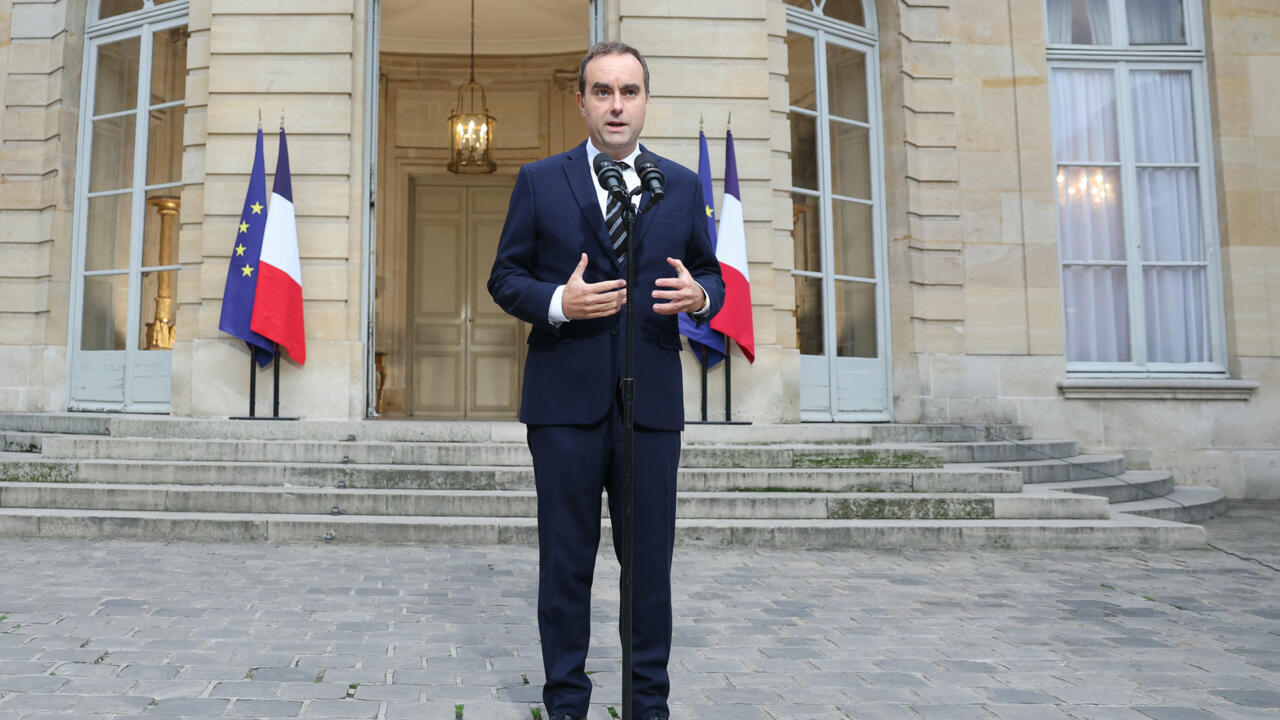
France’s new prime minister resigned on Monday after less than a month in office, sinking the country further into a political crisis and dealing a fresh blow to President Emmanuel Macron.